
The Ultimate Self-Care Evening Routine For Women Who Feel Mentally Exhausted
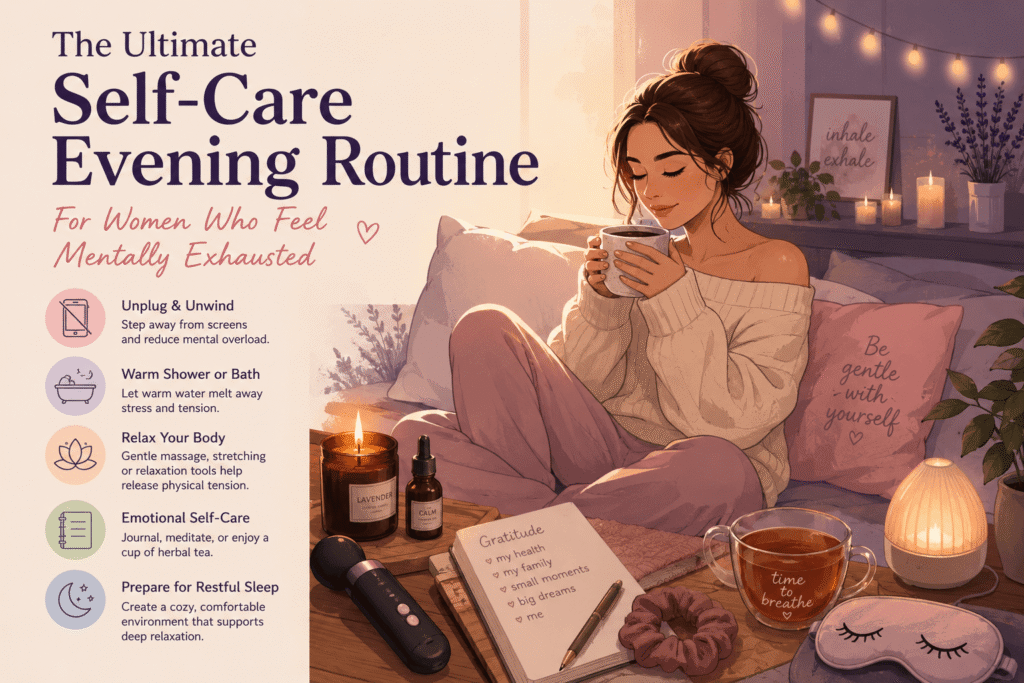
Finding the perfect evening self care routine is essential when you are feeling drained.
Modern life can feel emotionally overwhelming. Between work responsibilities, family obligations, constant notifications, and endless mental to-do lists, many women end the day feeling completely drained — even when they haven’t physically done much.
Mental exhaustion is different from ordinary tiredness. It can leave you feeling anxious, emotionally numb, restless at night, and unable to fully relax. That’s why creating a calming evening routine is one of the most powerful forms of self-care.
A peaceful nighttime routine helps your body slow down, calms your nervous system, and creates space for emotional recovery. Even small habits can make a huge difference in how you sleep, think, and feel the next day.
In this guide, we’ll explore a simple yet effective self-care evening routine designed specifically for women who feel mentally exhausted and overstimulated.
Why Mental Exhaustion Feels Worse At Night
Finding the perfect evening self care routine is essential when you are feeling drained.
During the day, distractions often keep stress hidden beneath the surface. But once the evening becomes quiet, unresolved emotions and mental pressure tend to appear all at once.
Many women experience:
- Racing thoughts before bed
- Difficulty relaxing
- Emotional irritability
- Anxiety at night
- Poor sleep quality
- Feeling “tired but unable to rest”
This happens because the nervous system stays stuck in a state of overstimulation. Without intentional relaxation, the mind never fully shifts into recovery mode.
A structured self-care evening routine can help signal safety, comfort, and calmness to your body and mind.
1. Create A Calm Digital-Free Space
One of the fastest ways to reduce mental overload at night is limiting screen exposure before bed.
Social media, emails, and constant notifications keep the brain alert and emotionally activated. Instead of relaxing, your mind continues processing information long after you stop scrolling.
Try creating a “digital sunset” about 30 to 60 minutes before sleep.
Simple ideas include:
- Turning off unnecessary notifications
- Dimming room lights
- Playing soft music
- Lighting a candle
- Reading a calming book
- Avoiding stressful conversations
Creating a softer environment helps your brain transition into rest mode naturally.
2. Take A Warm Shower Or Bath To Release Tension
Warm water can help relax tight muscles and calm the nervous system after a stressful day.
A shower or bath also creates a psychological reset — almost like washing away the emotional pressure collected throughout the day.
To make it more relaxing:
- Use calming scents like lavender or chamomile
- Lower bright bathroom lighting
- Practice slow breathing while showering
- Focus on the warmth and physical sensations
This simple ritual helps reconnect the mind and body, especially after long periods of emotional stress.
3. Use Gentle Body Relaxation Techniques
Mental exhaustion often becomes physical tension without realizing it.
The shoulders tighten. The jaw clenches. The body stays alert even while resting.
Gentle relaxation methods may help:
- Neck and shoulder massage
- Light stretching
- Foam rolling
- Heating pads
- Relaxation massagers
- Deep breathing exercises
Physical relaxation can help send calming signals to the nervous system and reduce nighttime stress levels.
For many women, adding soothing wellness tools into their evening routine creates a stronger sense of comfort and emotional release.
4. Practice Quiet Emotional Self-Care
Self-care is not always about productivity or “fixing” yourself. Sometimes it simply means giving yourself permission to slow down emotionally.
A calming evening ritual may include:
- Journaling your thoughts
- Gratitude writing
- Meditation
- Herbal tea
- Listening to calming audio
- Gentle mindfulness exercises
Even 10 quiet minutes can help reduce emotional overstimulation and improve mental clarity.
The goal is not perfection — it’s creating a safe emotional space before sleep.
5. Create A Comfort-Focused Sleep Environment
Your bedroom environment has a powerful impact on sleep quality and nighttime relaxation.
A calming sleep space should feel:
- Quiet
- Soft
- Comfortable
- Warm
- Low-stimulation
Consider:
- Soft blankets
- Comfortable sleepwear
- Warm lighting
- Relaxing scents
- Decluttering visible mess
- White noise or calming sounds
Small comfort-focused upgrades can make nighttime feel more restorative and emotionally grounding.
6. Try A Simple 30-Minute Evening Reset Routine
If you often feel overwhelmed at night, try this simple routine:
First 10 Minutes
- Put your phone away
- Dim lights
- Drink water or herbal tea
Next 10 Minutes
- Warm shower or bath
- Gentle stretching or massage
Final 10 Minutes
- Deep breathing
- Journaling
- Calm music or meditation
This type of structured nighttime habit can help train your body to associate evenings with relaxation instead of stress.
Why Evening Self-Care Matters More Than You Think
Many women spend the entire day caring for responsibilities, work, and other people — while ignoring their own emotional recovery.
But chronic stress and mental exhaustion eventually affect:
- Sleep quality
- Mood
- Hormonal balance
- Energy levels
- Focus
- Emotional wellbeing
Creating an intentional evening self-care routine is not laziness or indulgence. It’s a healthy way to support your mental and physical wellness long-term.
Small nightly rituals can become powerful emotional anchors during stressful seasons of life.
Final Thoughts
You do not need a perfect routine to feel better.
Even a few calming nighttime habits can help reduce stress, improve relaxation, and support deeper emotional recovery over time.
Start small. Create moments of comfort. Give yourself permission to slow down at the end of the day.
Because real self-care is not about doing more — it’s about allowing yourself to rest.
FAQ
What is the best evening routine for stress relief?
A good stress relief evening routine usually includes limiting screen time, taking a warm shower, practicing relaxation techniques, and creating a calming sleep environment.
How can I relax mentally before bed?
You can relax mentally before bed by reducing stimulation, practicing deep breathing, journaling, listening to calming music, or using gentle self-care rituals that help calm the nervous system.
Why do I feel emotionally exhausted at night?
Mental and emotional stress often accumulates throughout the day. At night, when distractions disappear, the brain becomes more aware of emotional overload and unresolved stress.
Can self-care improve sleep quality?
Yes. Relaxing self-care habits may help reduce stress hormones, calm the nervous system, and improve overall sleep quality over time.